Places in their life
Explore recorded events and connections, place by place.
Places will load as you reach this section.
Explore places & events
Town and regional markers represent an area. Each record describes the connection to that place.
The life of Temperance Wick
Biography
Southampton and Bridgehampton, Province of New York · Born January 16, 1678/9; living December 15, 1718
Life at a glance
Temperance Wick lived at the center of a growing family whose Bridgehampton home also served as the Bull Head Tavern. Her husband’s will provided for lifelong housing and property income and required her consent when younger children placed their inheritances at interest. These provisions reveal her importance to the household’s continuity and its children’s financial security.[1,2]
Biography
Temperance Wick’s family home was also a place where travelers stopped. At the Bull Head Tavern in Bridgehampton, on eastern Long Island, the needs of a household met those of people passing along the roads between settlements. Food, fuel, water and bedding sustained both kinds of life under its roof. When her husband John prepared for his death in 1718, his provisions for Temperance reached beyond a room and an income: the younger children would need their mother’s approval when entrusting their inheritance to others. Her place in the family carried financial authority as well as responsibility for care.[1–3]
Temperance was born on January 16, 1678/9, a daughter of Samuel Barnes and Patience Williams. Southampton’s records place her between an elder sister, Patience, born in August 1677, and a younger brother, Joshua, born in April 1683. Decades later, her mother’s will named her as Temperance Wick, connecting the Barnes child with the married woman in the Wick household. The will also named Sarah Sayre and Samuel, and remembered the deceased daughter Patience through her husband, Anthony Ludlum.[8]
In 1698, the Southampton enumeration listed John and Job Wick alongside two females named Temperance. They were most likely wife and daughter, already part of a household that would grow considerably before John’s final illness. This probable identification places her in the family well before the last will that preserves so much of what is known about her.[7]
Southampton was the township; Bridgehampton, where the family made its home, lay between Southampton village and East Hampton, in present-day Suffolk County, New York. Fields, meadows and ponds surrounded the settlements. Horses and carts depended on usable roads and crossings: the town’s specification for a bridge over nearby Sagg Pond in 1686 expressly required passage for people, horses and carts. The tavern kept by John served this traffic, bringing the wider community to the property where Temperance lived.[2]
Hospitality required a steady supply of provisions and labor. Guests needed food and drink, fires needed fuel, and beds and linen needed tending. Much depended on the season. The region’s farms supplied grain and livestock; surrounding waters supplied fish. Corn and rye, fresh and salted pork, and preserved fish helped sustain households between harvests and catches. In 1676 the town had granted fishing privileges in Mecox Bay, south of Bridgehampton, specifically for taking small fish to salt. Keeping food usable was as necessary as obtaining it.[2,3]
The household also belonged to a trading economy. Nearby East Hampton sent local products through Northwest Harbor to Boston and New York, receiving manufactured goods, including goods from England. John’s cloth-finishing work and commercial dealings connected the Wick family to these exchanges. Home production, purchases and the work of others all contributed to the life maintained on their property.[2,4]
That prosperity included the ownership of people. In 1712 John purchased an enslaved Indigenous woman named Sarah and a boy named Abel. The protections that property brought Temperance and her children coexisted with the denial of freedom to Sarah and Abel. Their particular duties have not been recovered, but their presence in the family’s property records is part of its history.[5]
By December 1718, John was seriously ill. His will named nine children, five sons and four daughters, some still too young to establish independent livelihoods. The proposed sale of his remaining personal property would create a fund earning six percent interest for their maintenance until the youngest reached fourteen and could be apprenticed to a trade. Temperance’s continuing care was to be supported by income from the estate.[1]
Her own security rested on more than that temporary fund. Although Henry was to inherit the dwelling and barn, she was to retain the east end of the house, half the cellar and half the well, together with a lifetime interest in one-third of the real estate. The cellar offered storage; the well supplied water that had to be drawn and carried for drinking, cooking and washing. These were practical provisions for maintaining a home. The will also made her responsible for the dues and charges falling on her third of the property.[1–3]
Temperance and the daughters Temperance and Edith could each retain household goods through the auction: a bed, bedstead and suitable furnishings, and fifty pounds’ worth of other movable property, charged against their individual inheritance shares. When the youngest child reached fourteen, the remaining personal estate was to be divided into eight shares, one belonging to Temperance herself. Children still under age could choose someone to hold their money at interest, but only with their mother’s consent. The arrangement gave her a voice in decisions affecting their security, while three appointed executors were to administer the estate until the sons John and Henry came of age.[1]
John died on January 16, 1718/19. In 1722 their son John graduated from Yale College in New Haven, Connecticut, following the educational course for which his father had set aside land. Temperance’s later years remain obscure. The arrangements made at the end of her husband’s life nevertheless show the range of responsibilities expected of her: maintaining a home, supporting children and judging how their money should be entrusted. In a family whose livelihood combined land, trade and hospitality, those decisions concerned both daily survival and the children’s prospects beyond the household.[1,6]
Images & documents
Select an image to browse the gallery. Source links open the original records in a new tab.
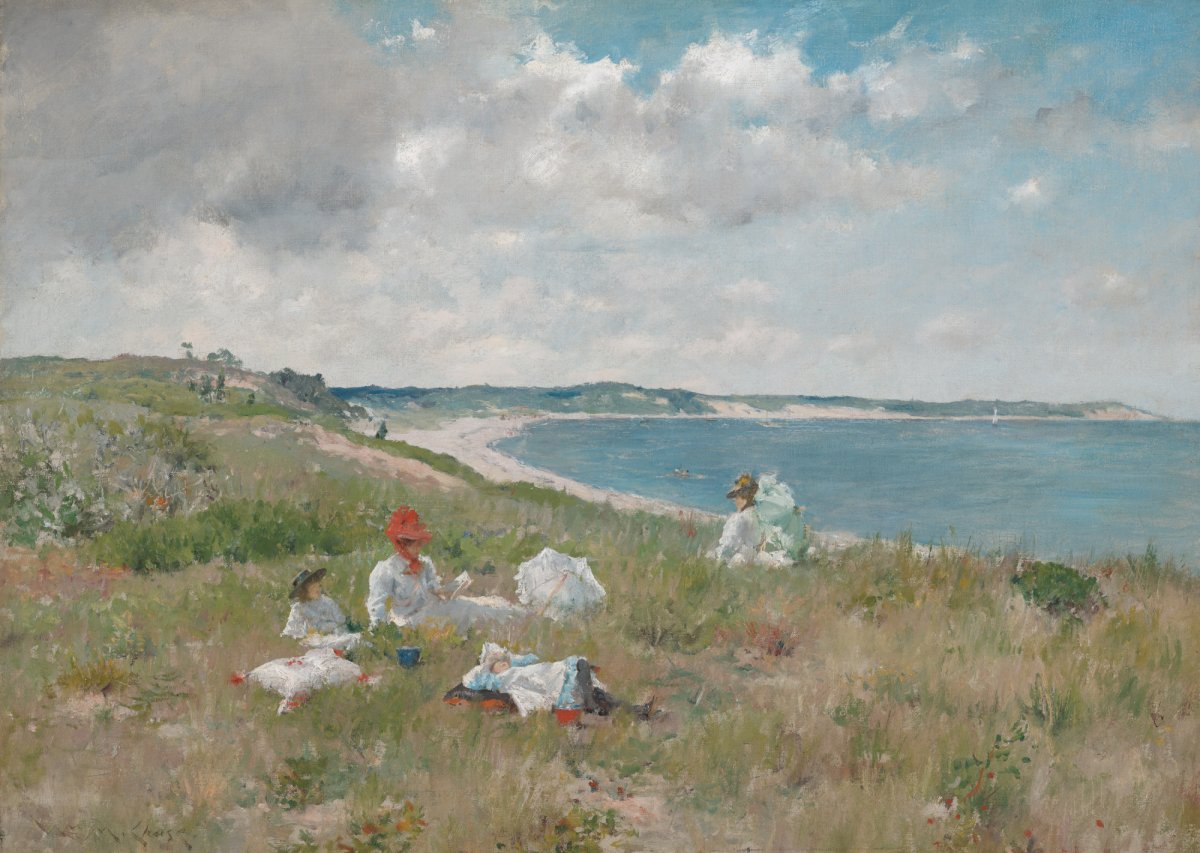
Women and children rest in the dune grass above the shore at Shinnecock Hills. Chase fills this family scene with sunlight, sea air and the pleasure of an unhurried afternoon. William Merritt Chase, circa 1894. Amon Carter Museum of American Art, Fort Worth, Texas, 1982.1. Public domain.
View source ↗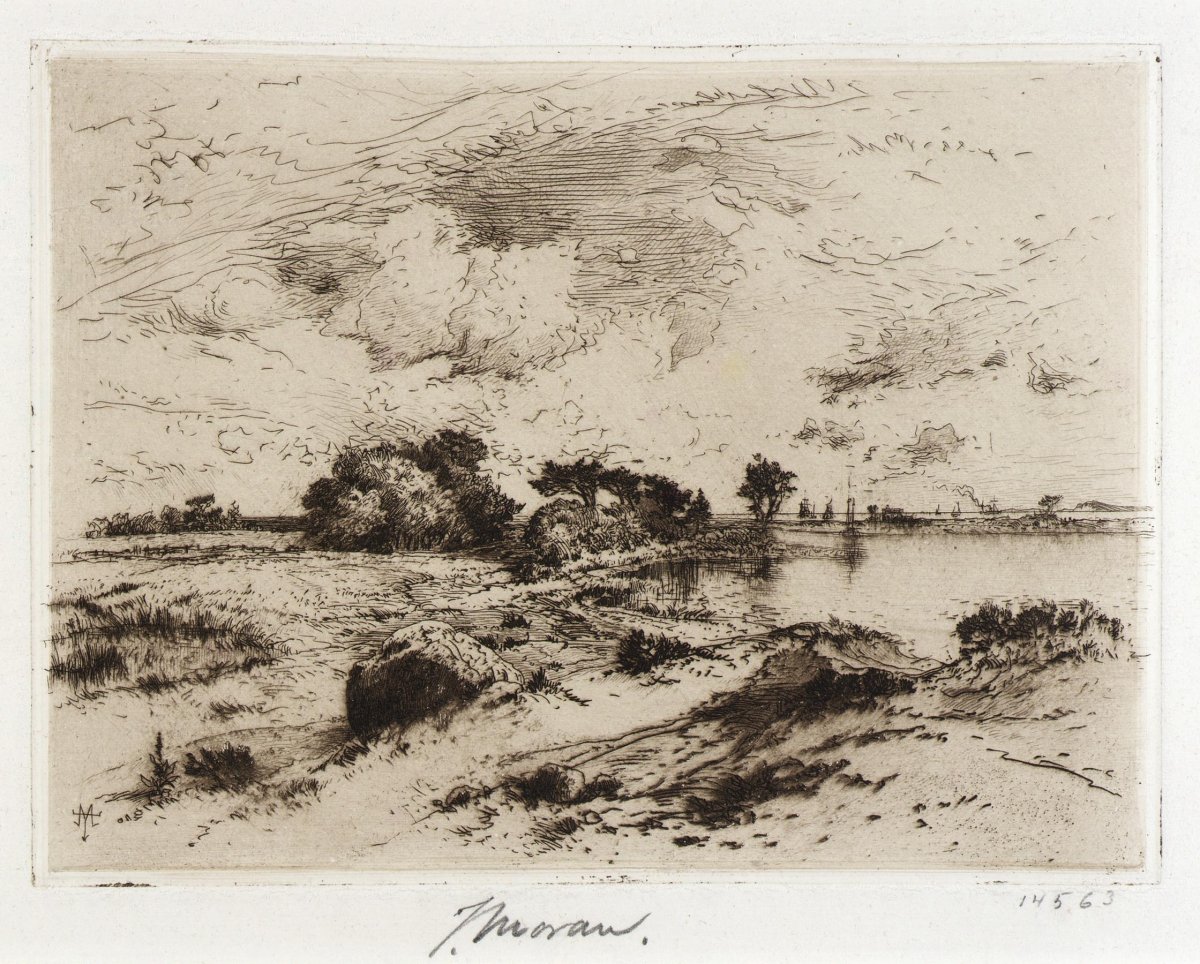
Moran’s East Hampton harbor view offers a quieter East End landscape: a place shaped by shore, water and the broad coastal sky. Three Mile Harbor, Easthampton · Thomas Moran, circa 1880–1890. Smithsonian American Art Museum, 1973.122.74.
View source ↗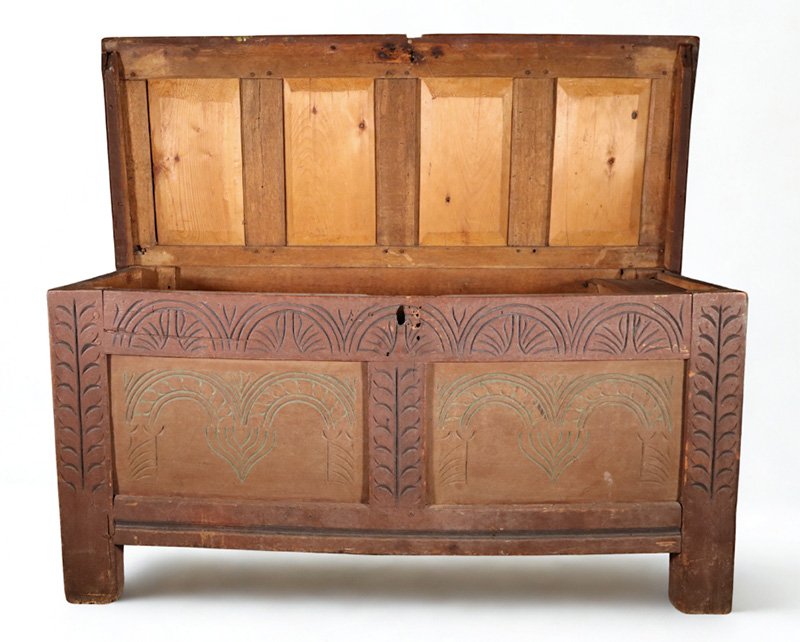
This carved oak-and-pine chest, dated 1650–1680, comes from eastern Suffolk County or New Haven. Its craftsmanship brings the domestic world of the region into close view. Carved chest · 1650–1680, eastern Suffolk County, New York, or New Haven, Connecticut. Preservation Long Island, 1975.2.
View source ↗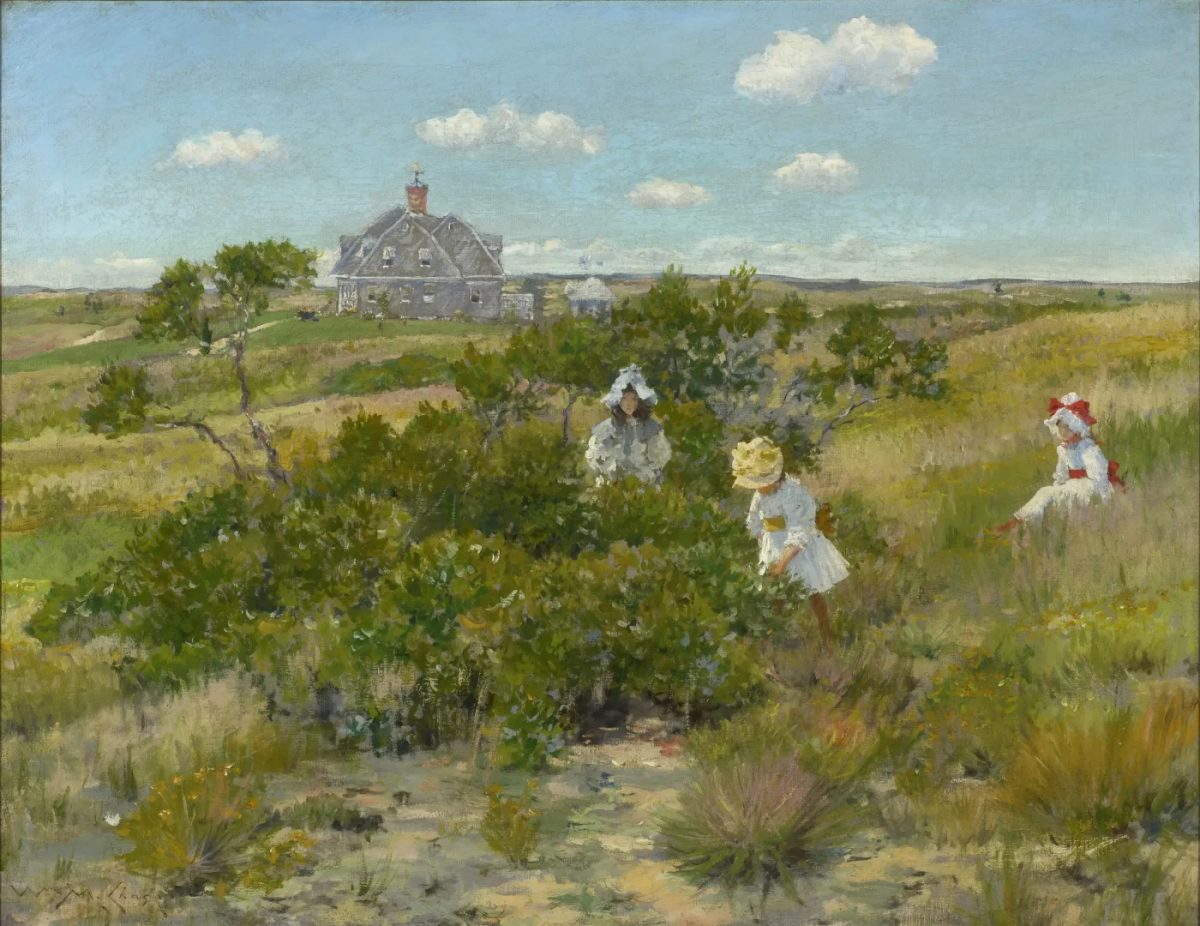
Chase turns from a sweeping panorama to the vegetation and sandy ground of Shinnecock Hills, giving the local landscape a more intimate scale. The Big Bayberry Bush · William Merritt Chase, circa 1895. Parrish Art Museum, Littlejohn Collection, 1961.5.5.
View source ↗Family relationships
Parents
Full siblings
Children with John Wick
A life in dates
4 events
- Household Enumeration
Southampton household 37 lists John and Job Wick and two females named Temperance; wife and daughter is the probable identification.
Southampton, New York, United States
Show on map → - Will Beneficiary
Named as John Wick’s wife and beneficiary, with lifelong property provision and consent over minors’ investments.
Bridgehampton, New York, United States
Show on map → - Residence
Family home at the Bull Head Tavern in Bridgehampton; the duration of Temperance’s residence is not precisely established.
Bridgehampton, New York, United States
Show on map → - Birth
Birth recorded by Samuel Barnes in the Southampton town records; birthplace is not specified.
More about this person
Other names
Temperance Barnes
Notes & sources
- 1
William S. Pelletreau, Abstracts of Wills on File in the Surrogate’s Office, City of New York, vol. II, Collections of the New-York Historical Society for 1893 (1894), pp. 191–193, digitized volume. John Wick’s will dated December 15, 1718, proved April 3, 1719; original locator Liber 9, pp. 63–66. The published abstract and preserved page images establish Temperance’s name, housing and lifetime real-estate provision, the child-support arrangement, auction option and executors. They record intentions, not completed administration. The fuller transcriptions specify a bed, bedstead and furnishings and fifty pounds of movable property for each of the three women, deducted from her share. The end of the temporary child-support provision is not treated as the end of her lifetime property interest. The children named are Job, John, Henry, Daniel, James, Temperance, Edith, Anne and Phebe; maternity of every child is not established. The fuller text is preserved in Pamela L. Speis’s Ancestors and Descendants of Frank Johnson Wick (1880–1960), Mahoning Valley Historical Society compilation, printed pp. 24–27 (PDF pp. 27–30). It transcribes both a will and the recorded copy, identifying the latter as New York Wills, Liber 9, pp. 74–78. These are the later copy’s page numbers; pp. 63–66 identify the original liber, as explained in John A. Maltby’s separately attributed transcription preserved with the probate research. Both state fifty pounds “to each of them”; the recorded-copy transcription also specifies the mother’s consent to minors placing their shares at interest. These are transcriptions, not manuscript images inspected here, and the two versions are not independent witnesses to events. The fuller text also names Daniel among the recipients of the remaining personal estate; Pelletreau’s abstract omits him there. Its probate endorsement distinguishes local proof on April 3 from the governor’s grant on June 9, 1719.
Back to biography - 2
James Truslow Adams, Memorials of Old Bridgehampton (1916), pp. 91–95, 114–117, digitized volume. Adams identifies John as keeper of the Bull Head Tavern and describes the house and land. Exact construction and marriage dates are not supplied here. The 1686 bridge specification is contemporary wording quoted by Adams. His agricultural description incorporates a nineteenth-century retrospective by Henry P. Hedges; it is used for regional tasks and food practices, not a complete household inventory or a claim of unchanged conditions across a century. The 1676 salting-fish grant is tied to a specific town-record reference (vol. II, p. 67). His p. 94 quotation includes half the well and cellar; these details also appear in both fuller will transcriptions cited in note 1, although Pelletreau’s shorter abstract omits them.
Back to biography - 3
Michael Olmert, “Laundries,” Colonial Williamsburg Journal, autumn 2009, article. Used only for the mechanics of manual laundering and its requirements for water, heat and labor. Its later Virginia buildings, inventories, staffing and furnishings are not transferred to the Wick house. The discussion of tavern provisioning is a functional inference from the documented establishment. No evidence yet establishes Temperance’s personal tavern license, bookkeeping, daily task list or independent management of the business.
Back to biography - 4
Timothy Breen, “Trade and Community: East Hampton’s Curious Commercial Origins,” lecture, October 11, 1998, pp. 1–2 and 9, East Hampton Library transcript. Regional context for trade and manufactured household goods. No particular imported item is assigned to Temperance without an inventory.
Back to biography - 5
Adams, pp. 94 and 114, citing Southampton town records vol. VI, p. 61. The printed p. 114 image was inspected: John Parker sold John Wick an Indigenous woman named Sarah and a boy named Abel in 1712, for £21 12s. The underlying deed was not inspected. Their specific work, location within Wick’s properties, relationship to one another, and treatment by Temperance are not established. The discussion of unequal labor is interpretation of documented ownership, not a claim that Sarah personally cooked or laundered for Temperance.
Back to biography - 6
Franklin Bowditch Dexter, Biographical Sketches of the Graduates of Yale College, vol. I (1885), p. 268, page image, identifies the Yale graduate of 1722 as John and Temperance’s son. It does not document her feelings about his schooling, her participation in securing it, or survival to graduation. The Southampton birth entry and her mother’s probate now support her identification as Temperance Barnes, born January 16, 1678/9, daughter of Samuel Barnes and Patience Williams (note 8). Her marriage date, death and burial remain unresolved. The 1698 household identification is discussed in note 7. December 15, 1718 is the latest secure evidence of her being alive used in this edition. The endpoint here is an evidentiary limit, not a death date.
Back to biography - 7
George Rogers Howell, The Early History of Southampton, L. I., New York (1887), pp. 34–45, especially printed p. 36. The enumeration is dated September 15, 1698 and reproduced from manuscripts in the New York secretary of state’s office. Household 37 groups Mr. John Wick and Job Wick with “Teprance Wick” and “Temprance Wick.” Wife and daughter is the most plausible identification, but the list supplies neither ages nor explicit relationships. It supports household presence by 1698, not an exact marriage date or maternity of all later children. The Barnes identification is supported by the correlated birth, marriage and maternal probate records discussed in note 8; the 1698 enumeration alone does not establish it.
Back to biography - 8
The Second Book of Records of the Town of Southampton (1877), pp. 242, 250 and 292: Samuel Barnes’s marriage to Patience Williams, November 9, 1676; daughters Patience and Temperance’s births; and Joshua’s birth. Preserved page images read April 8, 1683 for Joshua. New Jersey Archives, vol. XXIII (1901), p. 26, abstracts widow Patience Barns’s will of December 27, 1716, proved January 12, 1716/17, naming Temperance Wick and the other children. These published records support the correlated identification; the probate manuscript has not been examined. The double year in Temperance’s birth is retained. Her mother’s Cohansey estate does not establish Temperance’s presence there. See the Southampton register and the published probate abstract transcription. Preserved page images accompany the source records.
Back to biography