Places in their life
Explore recorded events and connections, place by place.
Places will load as you reach this section.
Explore places & events
Town and regional markers represent an area. Each record describes the connection to that place.
The life of John Wick
Biography
Circa 1661–January 16, 1718/19 · Southampton and Bridgehampton, Province of New York
Life at a glance
John Wick combined cloth finishing, farming and commerce with public service on eastern Long Island. He kept Bridgehampton’s Bull Head Tavern, owned land and cattle, and served as Suffolk County sheriff, magistrate and Southampton town trustee. His provisions for his wife and children—including land set aside for his son’s college education—reveal the future he hoped to secure for his family.[1,2,5]
Biography
At the crossroads in Bridgehampton, on the eastern end of Long Island, John Wick’s house served both his family and the travelers who came to his tavern. Its owner dealt in land and merchandise, held county office, and acquired interests well beyond the surrounding farms. By December 1718 he was seriously ill. As he arranged his children’s inheritances, he set aside land to be sold for his son John’s college education. Some of the property he had accumulated would provide the next generation with a livelihood through learning.[1,2]
Wick first appears clearly in Southampton’s records on April 4, 1693, identified as a serge dresser—a craftsman who finished woven cloth. The town granted him acreage and its interest in the little Peconic watercourse. He was then about thirty-two. His birthplace and early training remain uncertain, but by 1696 he was being described as a gentleman, a designation of social standing.[2]
Southampton was a town in the Province of New York, in what is now Suffolk County. Wick moved from Southampton village to nearby Bridgehampton, today a hamlet within the same town, and kept the Bull Head Tavern there. Roads connecting the settlements converged near his home. His property included fields and meadows, together with rights in the town’s common lands—land in which holders possessed shares rather than separate, individually enclosed farms.[2]
By September 1698, the Southampton household list recorded John and Job Wick with two females named Temperance, most plausibly his wife and daughter. The family was already established before his first term as sheriff. Its later growth would give his plans for land, schooling and apprenticeships their particular urgency.[10]
The tavern served a countryside where journeys depended on horses, carts and reliable crossings. When the town authorized a bridge across nearby Sagg Pond in 1686, it specified that people, horses and carts must all be able to use it. For Wick, passing traffic brought customers, while a usable cartway helped merchandise reach its destination. Keeping the inn supplied with food, drink and fuel required work throughout the year.[2,3]
Local historian William Donaldson Halsey later credited Wick and fellow merchant Edward Howell with cutting Merchants Path through the woods from Poxabogue, near Bridgehampton, to Northwest Harbor in neighboring East Hampton. Their merchandise landed at the harbor and was carried inland largely by ox teams. Ships brought goods to the sheltered northern shore, and carts completed the journey to the settlements nearer the Atlantic.[3]
Eastern Long Island was already deeply involved in trade. Vessels from East Hampton carried whale oil and farm products to Boston and New York, returning with manufactured goods, many originating in England. Imported cloth, metalware and ceramics entered local homes alongside things made there. Wick’s work with cloth and his dealings with New York merchants belonged to this exchange between the countryside and distant markets.[4]
He acquired two lots in a town subdivision known as the Forty Acre Division and built the windmill that gave Wind Mill Hill its name. The mill was mentioned in a record of 1712. He also registered a distinctive ear mark by which his cattle could be identified. His eventual bequests included livestock, plowing land, meadows and commonage, or rights to use common land. Meadows supplied fodder, cattle provided productive animals and wealth that could be passed to children, and milling converted harvested grain into usable food.[2]
By the end of the seventeenth century, Wick had entered public office. He served as sheriff of Suffolk County in 1699–1700 and again in 1701–1702, then as a magistrate, exercising local judicial authority, from 1702 until his death. Land was a recurring concern in his public as well as private life. In 1700 he joined other men in protesting an individual land grant. In 1711 the town appointed him to a committee examining ownership of common lands; the following year he became a town trustee, sharing responsibility for the community’s property.[2,5]
The wreck of the Mary, a small sailing vessel, near Montauk at Long Island’s eastern end in 1701 drew him into a disputed cargo transaction. According to his sworn account, six bales and a chest were brought into a warehouse belonging to Captain Mulford. Cloth was carried into the woods and, on a merchant’s instructions, delivered to Captain Abraham Howell, who paid Wick seven pieces of cloth for his work and expenses. Giving evidence at Huntington, farther west on Long Island, on March 19, 1702, Wick maintained that these arrangements preceded the government orders he subsequently received concerning the goods.[5]
He exchanged his payment for thirteen years of a boy’s service. The child was about nine or ten, so the obligation extended across adolescence and into adulthood. Cloth earned by Wick’s own work had purchased years of someone else’s labor.[5]
Other business took him into the collection of debts. In 1706–1707 James Emott, a New York attorney administering the estate of merchant Samuel Burt, authorized Wick to collect money on its behalf. Another New York associate, Abraham De Peyster, gave Wick power of attorney—authority to act as his representative. These commissions connected the Bridgehampton businessman to the city through other men’s financial affairs as well as his own.[2]
In 1712 Wick purchased two enslaved Indigenous people, a woman named Sarah and a boy named Abel, from John Parker of Southampton for twenty-one pounds and twelve shillings. His resources included power over people whose labor and freedom were treated as property. Their relationship to one another and their subsequent lives remain unknown.[6]
His family’s future occupied him as his health failed. The will he made on December 15, 1718, named five sons—Job, John, Henry, Daniel and James—and four daughters, Temperance, Edith, Anne and Phebe. Henry was to inherit the dwelling, barn and home lot, while other sons received land and livestock. For his wife, Temperance, Wick reserved the east end of the house and the use of one-third of his land and buildings for her lifetime. The house could pass to a son while she retained a place within it.[1]
He also wanted the estate to keep producing income. The remaining personal property was to be auctioned and the proceeds invested at six percent, providing money for Temperance to support the children until the youngest reached fourteen and could be apprenticed to learn a trade. His wife and the daughters Temperance and Edith could each purchase a bed, bedstead and suitable furnishings, along with fifty pounds’ worth of other movable property, to be deducted from their eventual shares. This gave them a way to keep possessions that would otherwise be sold, although their purchases would reduce the inheritance still due to them. When the remaining personal estate was divided, children still under age would need their mother’s consent to the placement of their shares at interest. Temperance was to have a say in the management of their money as well as resources for their support.[1]
For John’s education, Wick identified parcels to be sold, including land and meadow rights at Moriches, farther west on Long Island. He directed the executors—the men responsible for carrying out his will—to apply the money to the boy’s upbringing. He was willing to sell part of the landed estate to sustain that purpose. Alongside provision for farming and apprenticeship, he made room for a future shaped by college learning.[1]
Wick died at Bridgehampton on January 16, 1718/19, in his fifty-ninth year, and was buried on his own land there. His will was accepted by the court that April. In 1722, the younger John graduated from Yale College in New Haven, Connecticut. A scholarly catalogue identifies him as an owner of a 1621 edition of Johann Magirus’s work on natural philosophy, the study of the physical world through the ideas of the ancient Greek philosopher Aristotle. The volume bears John’s ownership inscription. The son for whom Wick had provided a college education had entered a world of books that extended far beyond the family’s Long Island property.[1,7,8]
The tavern also endured. Altered over successive generations, it was recorded in measured architectural drawings before its demolition in 1941. Meanwhile, stories about Wick’s house and grave grew into legends of murdered travelers, supernatural intervention and quarrels among his heirs. His reputation became more fantastic as his own lifetime receded. The surviving business and family records describe a man who combined skilled work, commerce, property and public office, connecting Bridgehampton to wider markets and preparing his children for different livelihoods. The opportunities he secured for them existed alongside the freedom he denied the people he enslaved.[2,9]
Images & documents
Select an image to browse the gallery. Source links open the original records in a new tab.
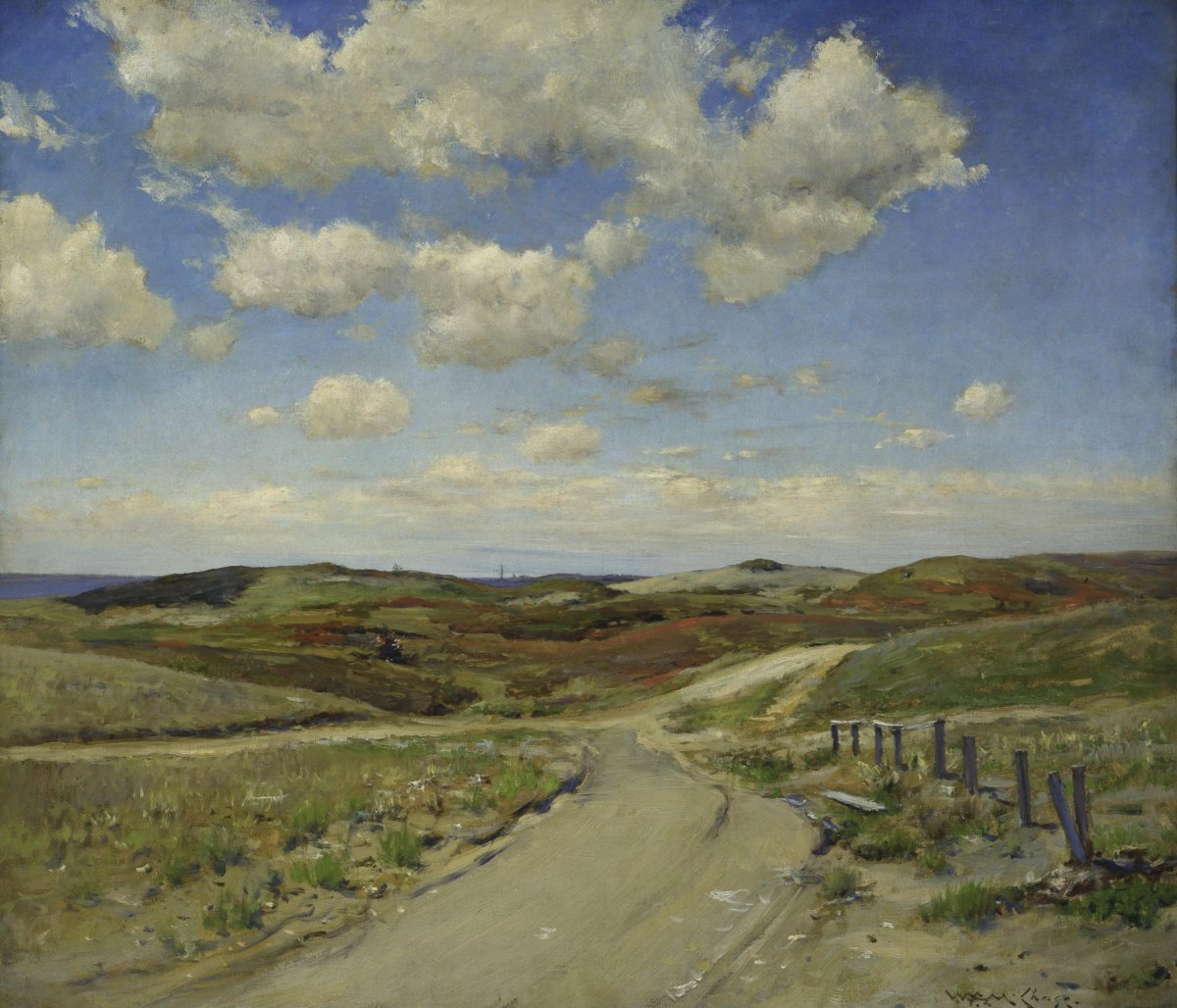
Chase’s broad view of Shinnecock Hills places the reader among the low rises, sandy ground and open skies of Southampton’s landscape. Shinnecock Hills · William Merritt Chase, circa 1895. Smithsonian American Art Museum, gift of William T. Evans, 1909.7.11.
View source ↗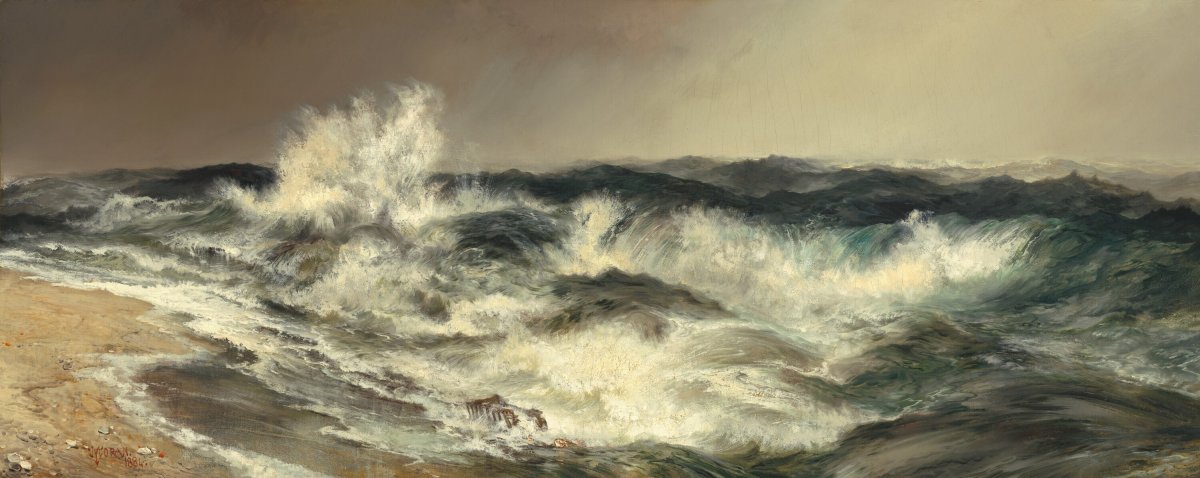
Moran’s surf and cloud-filled sky give physical force to the coastal setting of John’s life and the maritime events in his biography. The Much Resounding Sea · Thomas Moran, 1884. National Gallery of Art, gift of the Avalon Foundation, 1967.9.1.
View source ↗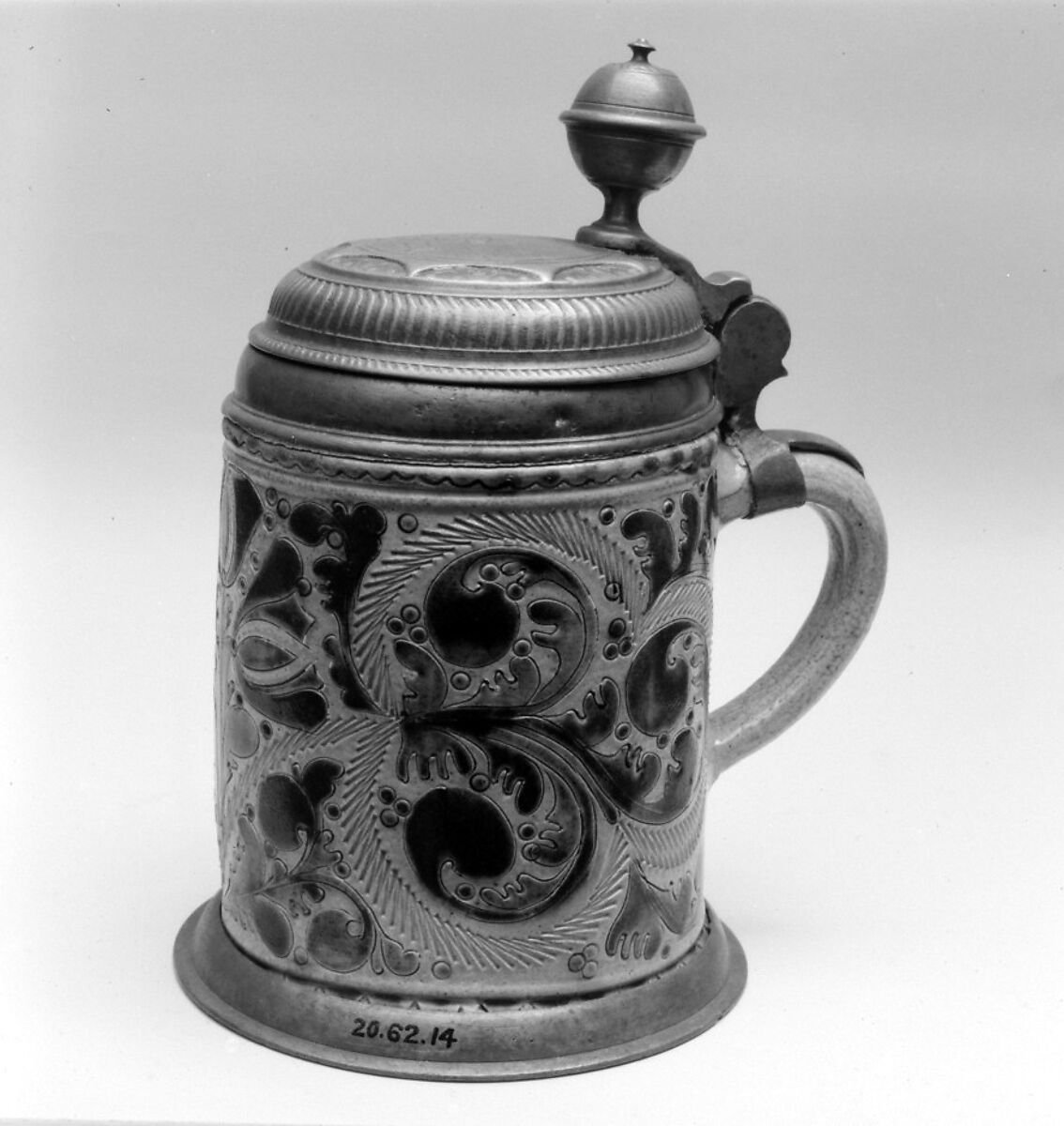
Salt-glazed stoneware of this type reached New York and New England through Atlantic trade. Its sturdy body and decorated surface bring tavern material culture into view. Westerwald stoneware tankard · 18th century. Metropolitan Museum of Art, 20.62.14.
View source ↗Family relationships
Children with Temperance Wick
A life in dates
23 events
- Occupation
Recorded as a serge dresser when granted acreage and the town’s interest in the little Peconic watercourse.
Southampton, New York, United States
Show on map → - Status Record
Described in town records as a gentleman.
Southampton, New York, United States
Show on map → - Household Enumeration
Southampton household 37 lists John and Job Wick and two females named Temperance; wife and daughter is the probable identification.
Southampton, New York, United States
Show on map → - Sheriff Tenure
First recorded term as sheriff of Suffolk County.
Suffolk County, eastern Long Island, New York, United States
Show on map → - Land Protest
Joined a protest against an individual land grant.
Southampton, New York, United States
Show on map → - Sheriff Tenure
Second recorded term as sheriff of Suffolk County.
Suffolk County, eastern Long Island, New York, United States
Show on map → - Magistracy
Magistrate from 1702 until his death on January 16, 1718/19.
Suffolk County, eastern Long Island, New York, United States
Show on map → - Testimony
Swore his account of dealings in the Mary’s cargo, including cloth received for services and exchanged for thirteen years of a boy’s service.
Huntington, New York, United States
Show on map → - Commercial Agency
Authorized by James Emott to collect debts of Samuel Burt’s estate; Abraham De Peyster also gave him power of attorney.
New York City
Show on map → - Livestock Mark
A distinctive ear mark for Wick’s cattle appears in the town register.
Southampton, New York, United States
Show on map → - Common Land Committee
Appointed to a committee examining ownership of common lands.
Southampton, New York, United States
Show on map → - Enslavement Purchase
Purchased an enslaved Indigenous woman named Sarah and a boy named Abel from John Parker for £21 12s.
Southampton, New York, United States
Show on map → - Will
Will provided housing and property rights for Temperance, support for younger children, and land to fund son John’s college education.
Bridgehampton, New York, United States
Show on map → - Estate Property
Moriches land and meadow rights allocated in the will toward son John’s upbringing and education.
Moriches, New York, United States
Show on map → - Probate Proof
John Wick’s will proved locally at Southampton.
Southampton, New York, United States
Show on map → - Probate Grant
Governor’s grant followed the local proof of the will.
- Public Office
Sheriff of Suffolk County in two terms, 1699–1700 and 1701–1702; magistrate from 1702 until his death.
Suffolk County, eastern Long Island, New York, United States
Show on map → - Residence
Family home and Bull Head Tavern at Bridgehampton; the date of the move from Southampton is uncertain.
Bridgehampton, New York, United States
Show on map → - Estate
Bridgehampton estate: will dated December 15, 1718, local proof April 3, 1719, and governor’s grant June 9, 1719.
Bridgehampton, New York, United States
Show on map → - Burial
Buried on his own land at Bridgehampton; exact burial date and parcel are not established.
Bridgehampton, New York, United States
Show on map → - Property
Owned lots in the Forty Acre Division and a windmill recorded in 1712 on Wind Mill Hill.
Bridgehampton, New York, United States
Show on map → - Death
Died at Bridgehampton on January 16, 1718/19.
Bridgehampton, New York, United States
Show on map →
More about this person
Other names
Capt. John Wick
Work & roles
Tavern keeper · Bull Head Tavern
Notes & sources
- 1
William S. Pelletreau, Abstracts of Wills on File in the Surrogate’s Office, City of New York, vol. II, Collections of the New-York Historical Society for 1893 (1894), pp. 191–193, digitized volume. Will dated December 15, 1718; proved April 3, 1719; underlying locator Liber 9, pp. 63–66. Published abstract and saved page images consulted, not the original manuscript. The document establishes intentions; actual auction purchases, investments and college disbursements have not been traced. It does not establish Temperance’s maternity of all nine children. The fuller text is preserved in Pamela L. Speis’s Ancestors and Descendants of Frank Johnson Wick (1880–1960), Mahoning Valley Historical Society compilation, printed pp. 24–27 (PDF pp. 27–30). It transcribes both a will and the recorded copy, identifying the latter as New York Wills, Liber 9, pp. 74–78. These are the later copy’s page numbers; pp. 63–66 identify the original liber, as explained in John A. Maltby’s separately attributed transcription preserved with the probate research. Both state fifty pounds “to each of them”; the recorded-copy transcription also specifies the mother’s consent to minors placing their shares at interest. These are transcriptions, not manuscript images inspected here, and the two versions are not independent witnesses to events. The fuller text also names Daniel among the recipients of the remaining personal estate; Pelletreau’s abstract omits him there. Its probate endorsement distinguishes local proof on April 3 from the governor’s grant on June 9, 1719.
Back to biography - 2
James Truslow Adams, Memorials of Old Bridgehampton (1916), pp. 91–100, digitized volume. His specific town-record references include vol. II, pp. 128, 143, 145, 147–148, 163, and vol. VI, pp. 7, 30–31, 267. Adams explicitly identifies Wick as the tavern’s keeper. His suggested arrival in Bridgehampton in 1695–1700 is an estimate. Exact construction dates differ among later accounts and are not asserted. The mill on Wick’s lot is not conflated with the separate town-common mill grant. Explanation of the practical relationship among land, fodder, livestock and milling is historical interpretation of these holdings, not a reconstructed daily schedule.
Back to biography - 3
William Donaldson Halsey, Sketches from Local History (1935), “Roads and Bridges,” p. 22, digitized book; searchable transcription. Halsey credits Wick and Edward Howell with Merchants Path and describes ox-team haulage from Northwest. The printed page image was inspected; the web transcription places the passage beneath the preceding page marker. The claim is attributed to Halsey, a later historian, rather than represented as an inspected contemporary road contract. The frequently repeated year 1712 was not established from his passage. Adams, pp. 91–92, supplies the 1686 bridge specification. The explanation of an inn’s provisioning needs is a functional interpretation; no Wick tavern ledger or menu was found.
Back to biography - 4
Timothy Breen, “Trade and Community: East Hampton’s Curious Commercial Origins,” lecture, October 11, 1998, pp. 1–2 and 9, East Hampton Library transcript. Used for neighboring East Hampton’s commercial economy, not to attribute a whaling venture, cargo, imported possession or trip to Wick.
Back to biography - 5
E. B. O’Callaghan, ed., Journal of the Voyage of the Sloop Mary, from Quebeck … 1701 (1866), pp. 38–47, especially Wick’s affidavit and the editor’s p. 47 biographical note, digitized volume. Published testimony and saved images underlie the cargo and service transactions. His account is testimony, not an adjudicated finding of innocence or guilt. The boy’s name, ethnicity, consent and precise legal status remain unestablished; a fixed service term is not automatically equated with lifetime slavery. Sheriff dates and magistracy derive from the editor’s note. The abstract of wills’ editorial “1669” sheriff date is erroneous.
Back to biography - 6
Adams, pp. 94 and 114, citing Southampton town records vol. VI, p. 61. The printed p. 114 passage names Sarah and Abel and states the price £21 12s. Adams is reporting and quoting the town record; the underlying deed has not been inspected. No mother–son relationship, tribal identity, particular occupation, residence within the tavern, death or burial is inferred.
Back to biography - 7
Franklin Bowditch Dexter, Biographical Sketches of the Graduates of Yale College, vol. I (1885), p. 268, page image. Identifies the graduate’s parents as John and Temperance and his class as 1722; explicitly places his father’s death in Bridgehampton. The printed page was inspected. This supports locality-level death geography, not a specific house or parcel. The elder John’s gravestone gives January 16, 1719; the dual-year form 1718/19 preserves historical year-numbering practice. Approximate birth is inferred from age evidence. The graduate is distinct from the later Captain John Wicks of Paris, New York.
Back to biography - 8
Colonial Society of Massachusetts, Publications, vol. 28, proceedings of April 1933, catalogue entry for Johann Magirus, Physiologiae Peripateticae, Geneva edition, 1621, catalogue and discussion. The entry transcribes Wick’s ownership inscription and identifies him as Yale A.B. 1722. Its “ba.” location abbreviation denotes the Boston Athenaeum. The physical book and handwriting were not independently inspected, and its present shelfmark/location has not been verified. Ownership supports a concrete connection with learned books; it does not establish exactly when or how he studied this volume, who paid for it, or whether his parents saw it.
Back to biography - 9
Historic American Buildings Survey, Wick’s Tavern, HABS NY-5419, Library of Congress collection. The saved March 1941 survey card reports demolition in February 1941. The drawings document the later building with alterations, not an unchanged 1718 household. Adams, pp. 95–100, and George Rogers Howell, The Early History of Southampton (1887), pp. 405–406, preserve burial information and later traditions. Stories of murder, the supernatural and heirs summoning the dead are not treated as biographical facts.
Back to biography - 10
Howell, The Early History of Southampton (1887), printed p. 36, 1698 household list, household 37. The enumeration is dated September 15, 1698. Relationships and ages are not explicitly supplied: identification of the two Temperances as wife and daughter is an inference from the household grouping and later family evidence. This does not establish an exact marriage date.
Back to biography
Family records
- Canonical PROD, revision 116
- Historic American Buildings Survey, Wick’s Tavern, HABS NY-5419, [Library of Congress collection](https://www.loc.gov/pictures/item/ny0764/)
- Retained family research and archival source findings
- Franklin Bowditch Dexter
- William S. Pelletreau
- Pamela L. Speis, Mahoning Valley Historical Society: Wick genealogy, version2018
- Howell, The Early History of Southampton (1887), Wick family