Places in their life
Explore recorded events and connections, place by place.
Places will load as you reach this section.
Explore places & events
Town and regional markers represent an area. Each record describes the connection to that place.
The life of Edward Garfield
Biography
Life summary. Edward Garfield established a household and dispersed landholding at Watertown, Massachusetts, after an English life associated with Hillmorton. His 1668 will shows how crops, cattle, domestic equipment and access rights were intended to support his later wife Joan and successive generations of the family.
When Edward Garfield planned for the support of his later wife, Joan, he tied an annual allowance to the produce of his land. His will of December 30, 1668 provided an annual £5 under a bond made before their marriage, payable in equal proportions of wheat, peas, rye and Indian corn if his executor had those crops growing. The produce was to be valued at country prices and delivered to a place chosen by Joan in nearby Cambridge, Massachusetts. Her security depended on an obligation that joined the farm’s production to her own choice of where to receive it. 699-1
Edward’s life had begun in England. Modern genealogical research identifies him with the Edward baptized at Hillmorton on July 28, 1583, in what is now Rugby, Warwickshire. His later home was Watertown, west of Boston; the precise journey that brought him there remains uncertain. 699-1
His Watertown holdings were dispersed. A land inventory describes a six-acre home lot, meadow and plowland, with further upland and a hundred-acre farm in its continuation. These were different kinds of resources, not simply a large area surrounding one house. Cultivated ground produced crops, while meadow supplied fodder for animals; paths and cartways made separated parcels usable together. Watertown’s agricultural economy helps explain why access could matter as much as acreage in a family settlement. 699-2699-3
Edward and Rebecca raised a family that included Joseph, Rebecca, Benjamin and Abigail. Rebecca died on April 16, 1661, aged about fifty-five. Edward married again, and the wife protected by his 1668 will was Joan. If she chose to remain in his house, she was to have the new bedchamber, its furniture and sufficient firewood for seven months. The will also provided maintenance from the estate for that period. She could select a cow from his cattle. Room, fuel, food and a productive animal addressed different parts of keeping a household going after his death. 699-1699-2
The domestic provisions also reveal work and people easily lost in a list of heirs. Joan was to retain pillows she had made and woollen and linen spinning wheels. Materials remaining in the house—flax, hemp or wool—were assigned for the benefit of his wife, daughter Abigail and maid Ann. Their maintenance was also to be charged to the estate for seven months, providing an interval of support while its affairs were settled. 699-1
The children’s portions reflected different circumstances. Rebecca Mixer’s £20 could be paid in corn or cattle. Abigail’s provision included £20 in marriage-related installments and an allowance of twenty-five shillings a year while unmarried. Samuel’s meadow came with a condition: he must allow a cartway through it to Edward’s meadow beyond Stony Brook. Joseph was assigned the house he already occupied, along with land and other property. Edward explained Samuel’s smaller portion by referring to land and other estate already given him in earlier years. The different portions took account of earlier support and attached obligations to future possession. 699-1
A granddaughter’s legacy linked inheritance to service. Sarah Garfield was to receive £7 if she completed her term, but only fifty shillings if she did not. The will does not identify the employer or describe the work. It does show Edward using the size of a family bequest to encourage completion of an existing obligation. 699-1
Benjamin was appointed executor, responsible for carrying out these arrangements. Edward died at Watertown on June 14, 1672, in his late eighties if the baptism-based identification is correct. The settlement he entrusted to Benjamin joined several responsibilities: sustain Joan, meet the children’s portions and keep productive property accessible. 699-1
Images & documents
Select an image to browse the gallery. Source links open the original records in a new tab.
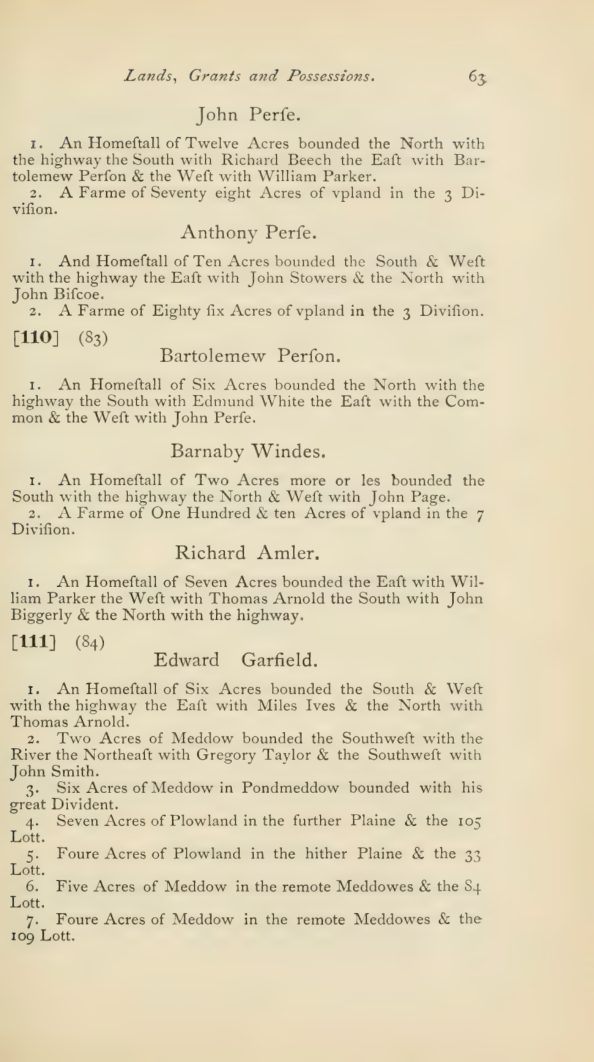
Watertown Records (1894), saved public-domain scan; upstream item watertownrecords 01 wate
View source ↗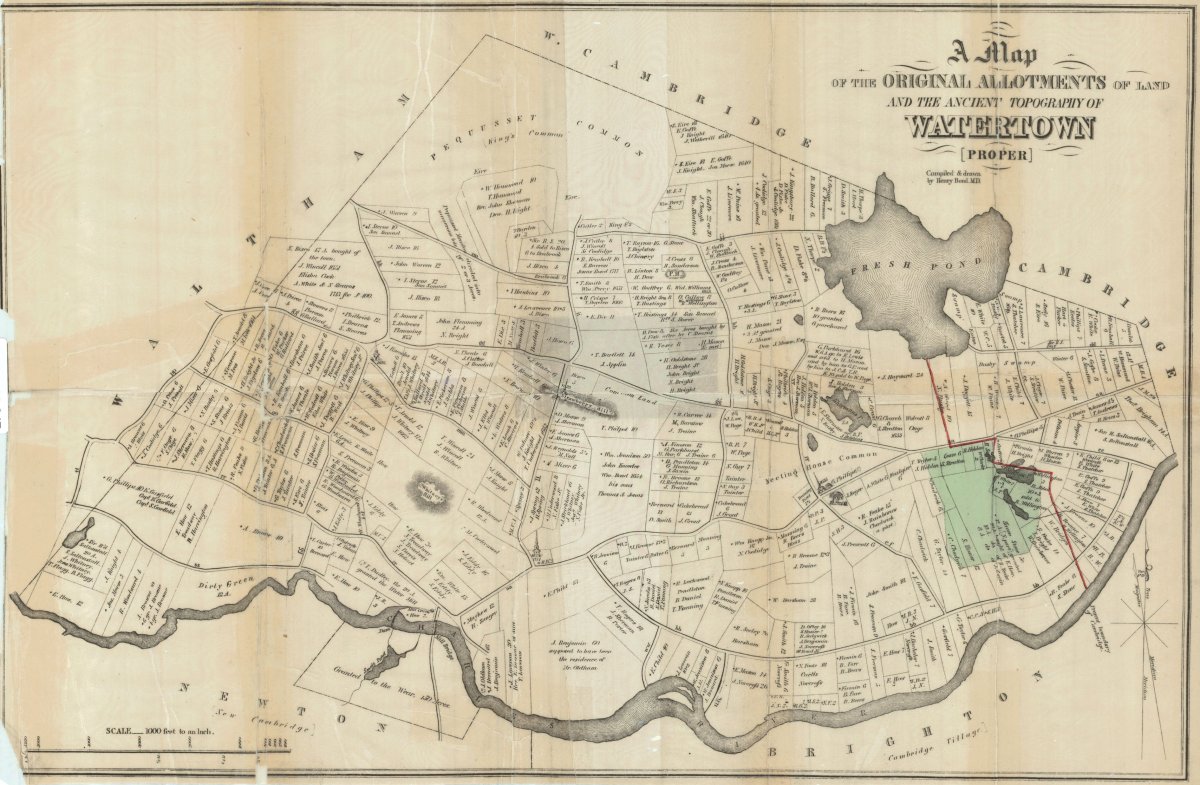
Birmingham Public Library, p15099coll3:746
View source ↗Family relationships
Parents
Children with Rebecca [surname unknown] Garfield
A life in dates
4 events
- Connection to this place
Baptism and English origins — Hillmorton, Warwickshire, England.
Hillmorton, Warwickshire, England
Show on map → - Will
Made a will providing support in crops, livestock and household goods for later wife Joan. Rebecca had died in 1661; the legal status of Ann, described as a maid, is uncertain.
Watertown, Middlesex, Massachusetts
Show on map → - Connection to this place
Immigrant household, will and death — Watertown, Middlesex, Massachusetts.
Watertown, Middlesex, Massachusetts
Show on map → - Residence
Edward Garfield came from England and settled with his household at Watertown.
Watertown, Middlesex, Massachusetts
Show on map →
Notes & sources
- 699-1
Edward G. Porter, “Concerning President Garfield’s Ancestry,” Proceedings of the Massachusetts Historical Society 19 (1882), pp 93–94, will of December 30, 1668, transcribed on WeRelate. Identity follows the attributed Anderson reconstruction on that page, not its incompatible older genealogy.
Back to biography - 699-2
Watertown Records, vol. 1 (1894), separately paginated sections: land inventories, pp. 63–64, 111; vital records, p. 23.
Back to biography - 699-3
Massachusetts Historical Commission, Watertown reconnaissance survey (1980), printed pp 2–3, settlement and economy. General setting, not evidence of individual activities.
Back to biography
Family records
- DNA consolidated biography and timeline evidence and decisions
- Robert Charles Anderson — English Origin of Edward Garfield of Watertown, Massachusetts